


My trip to Ruaha National Park
The flight to Dar es Salaam was uneventful. The hotel was fine, and so was the drive to the local airport. Then followed an unexpectedly adventurous route by plane with quite a few stops, but I finally arrived safely at Ruaha National Park, where my driver was patiently waiting for me.
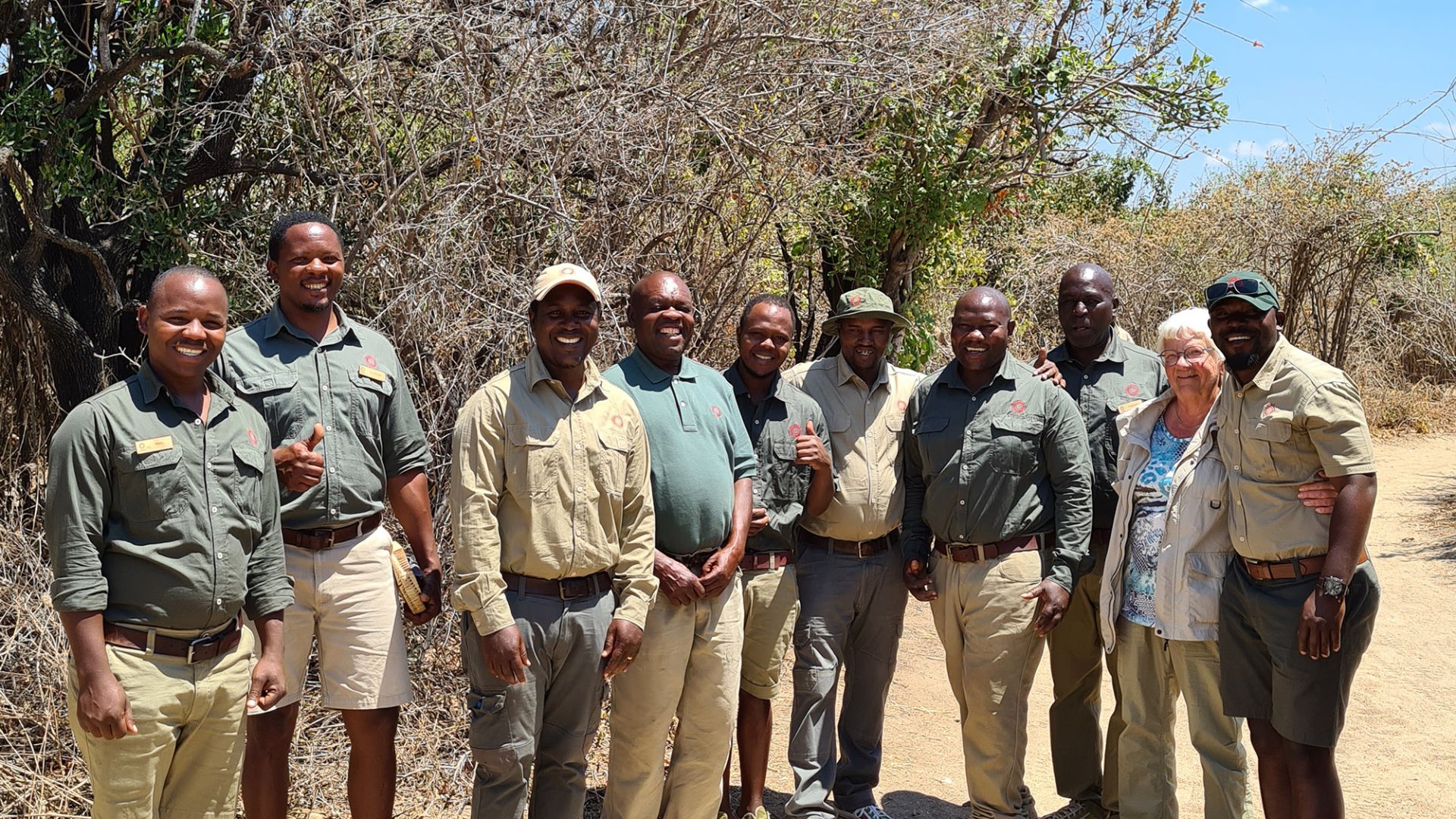
On the way to Kigelia Camp (on the Mwaguzi River), we encountered quite a few animals. The area was very dry. Great tent with an outdoor shower and stairs leading to an extra outdoor tent for night sky viewing. The staff is friendly, and you’ll immediately feel at home. Before dinner, there’s a campfire where you can chat with the other guests and the guides over a drink.
My driver/guide is called Mel, and I have him all to myself. The sunrises and sunsets are fantastic throughout the entire season. The first area has more baobabs, and the second more palms. Most rivers are dry. No problem for the elephants, who dig holes that fill with water. They share these with the babies, but with the teenagers, it’s sometimes amusing. They prefer to steal water rather than dig it themselves. They are firmly, but kindly, waved away. Sometimes they stay behind to drink when the troop moves on.
Many other animals also use the dug holes. The most common mammals are the impala and the elephants. You can watch impalas for hours foraging with yellow baboons or velvet monkeys. These baboons are much friendlier and somewhat smaller than those you normally encounter. The kudus snack on the red toothbrush flowers and calmly continue doing so as you pass by. The pigs don’t run away tail-first when they see you. Buffalo aren’t aggressive and stand right in front of you, drinking. Elephants come so close you can almost touch them. Every now and then you see something special: a zebra feeding two young at once. A hungry lion tries to outwit an oribi, but it’s far too fast and stays provocatively nearby to drink. There are also young baobab trees, so young you don’t recognize them as such, but they’re still 100 years old. Birds are easy to find because many trees and shrubs are bare at this time of year. Every night I had a herd, or a single elephant, around my tent, enjoying the leaves. When they started messing around on the roof and felling a tree, I decided to call the night watch. They were nonchalant when I wasn’t scared. Their comment: “It’s their habitat and they love these trees.” Fine. We missed the wild dogs; we were just a day too late, because the pool where the warthogs wallow had dried up, and then they go somewhere else. We did find old tracks, but the wild dogs were gone too.
The leopards also seem to pay little attention to tourists.No hysterical crowds of tourists desperate to get the best photo, thus scaring the animals to death. And few professional photographers. Usually, you see animals without other cars around. A relief. And you can observe them for a long time; they simply ignore you and go about their business.
The second lodge Ikuka Safari Camp is situated on a high hill in an even drier area, with a fantastic view. TThere’s a swimming pool where, as usual, nobody’s in it. Some tents have their own outdoor paddling pools you can use, provided… the elephants haven’t drunk it dry. Hilarious photos. There are five of us in a car, luckily we got along well. Festo is our guide. The rivers in this area are dry. There are still small pools, though. In one of them, we see a beautiful Saddlebilled Stork fishing. His catch is a catfish, which he can’t kill after much effort, so he swallows it alive. Also special is a herd of several hundred buffalo, with many young ones that you can see approaching from far away because of the cloud of dust they produce. They stand there drinking right in front of us, carefree; we don’t even exist to them. We do a lot of tracking, which works well in this sandy area. But sometimes we go back to where I was at the beginning. We see the honeybatchers, a parrot cracking a baobab tree fruit, and a python in a tree. At a breakfast spot, impalas are eating the leftover plant material the baboons throw down as they eat. While we’re unpacking breakfast, the baboons take off, and the impalas sometimes continue eating at arm’s length. But once the baboons are gone, nothing comes down, and they leave too. The squirrels and hyraxes aren’t shy either. Mongooses and honeybatchers are. Here, we also find many birds, including the African hawk eagle. And we play a game with a pearl-spotted owlet, who can’t figure out where the sound of his rival (Festo) is coming from. In the area called Little Serengeti Plain, the dried-out grass is so high that you can’t find a cheetah. Instead, you see a large herd of impala, huddled together anxiously. But then we see the lions by the river: First we see two young males, then three, then four and five. They ignore us at first, but then one crosses, and one by one the others follow. Hunting is better from the other side; it’s a less steep bank. I can finally go inspect the spare tires. Oops, there goes number six. We spend the remaining time with a herd of elephants trying to consume the enormous fallen palm fronds. That’s quite an art.
The next day it is over and I take the plane back to Dar es Salaam.
Would you like to make such an amazing trip too?
Then view the example tours that are fully customizable or
contact us directly for a customized trip!

